
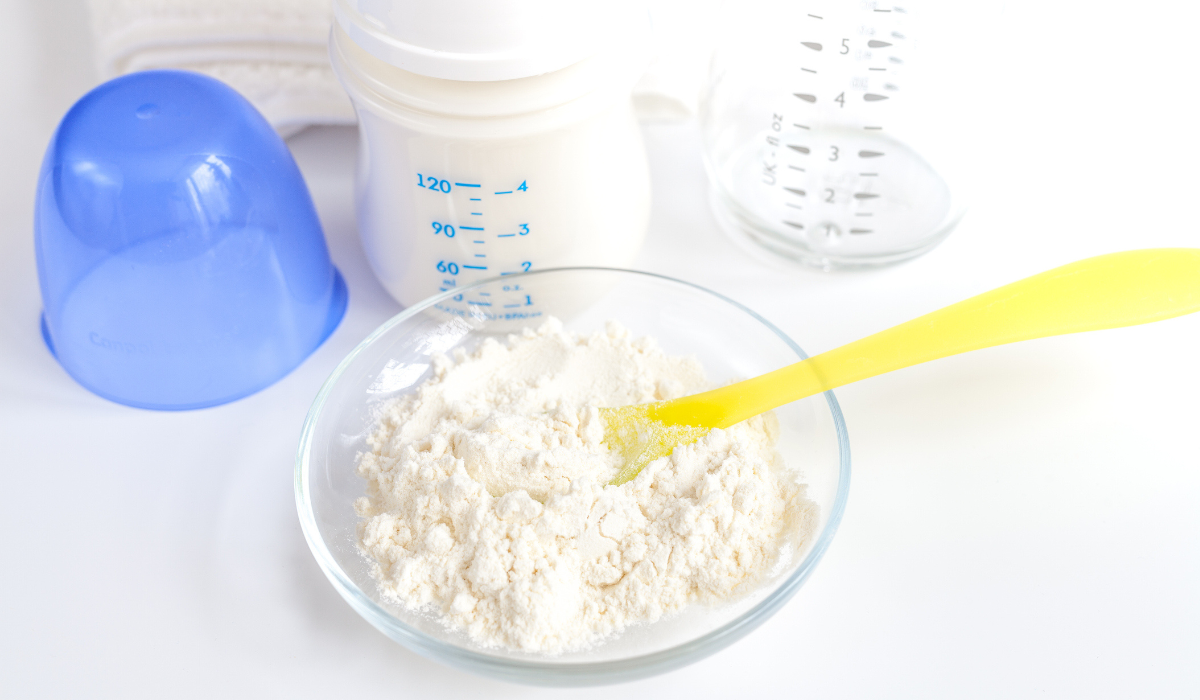
When it comes to infant formula, there is virtually no margin for error. As a critical source of nutrition for millions of infants, every ingredient and every manufacturing step must meet rigorous safety standards.
Infant formula is regulated in the U.S. by the FDA, according to 21 CFR Part 107.1 In addition, all individual ingredients used in infant formula must be Generally Recognized as Safe (GRAS) or approved as food additives for use in infant formula.2 However, despite clear regulations and oversight from the FDA, there have been several recalls of infant formula products in the U.S. caused by various contaminants. Most recently, these recalls have been caused by Cronobacter sakazakii,3 cereulide,4 and Clostridium botulinum.5 In light of this, FDA has taken additional steps to ensure the safe supply of infant formula, including the “Closer to Zero”6 initiative and “Operation Stork Speed.”
FDA's Closer to Zero Initiative and Its Impact on Infant Formula Ingredients
The closer to zero initiative is focused on reducing heavy metal exposure to, “as low as possible, while maintaining access to nutritious foods.”6 In pursuit of this goal, FDA has established, or is working to establish, action levels for heavy metals (lead, arsenic, cadmium, and mercury) in foods for infants and young children. This initiative has also impacted FDA’s expectations of GRAS Notices (GRNs) for ingredients to be used in infant formula. For example, heavy metal specifications should be as low as technically feasible based on results of testing the ingredient using methods that can detect very low levels of these substances, such as Inductively Coupled Plasma Mass Spectrometry (ICP-MS). The ultimate goal of the closer to zero initiative is to reduce exposure to heavy metals and create a lasting, positive impact on public health.
How Operation Stork Speed Is Changing Infant Formula Ingredient Requirements
Operation Stork Speed also aims to increase the effective oversight of infant formula in the U.S., which includes increased monitoring of contaminants. Specifically, this will involve increased testing for Clostridium botulinum, the organism responsible for botulism, and Bacillus cereus, the organism responsible for cereulide contamination. In addition to monitoring for microbial contamination, FDA has recently released their analysis of infant formula products for chemical contaminants, including heavy metals, pesticides, phthalates, and per- polyfluoroalkyl substances (PFAS).8 Learn more about PFAS in this article. FDA’s analysis program will guide the establishment of action levels for specific PFAS compounds in infant formula products sold in the U.S. These changes and heightened scrutiny as a result of Operation Stork Speed also have an impact on infant formula ingredient manufacturers. For example, GRNs for ingredients to be used in infant formula are now typically expected to include specifications and batch testing for Bacillus cereus and cereulide toxin, in addition to those for Cronobacter sakazakii (which have been required for several years).
What These FDA Changes Mean for Infant Formula Ingredient Manufacturers
Recent cases of infant formula contamination and product recalls have led to an increase in oversight by the FDA to ensure the safety of the U.S. infant formula supply. This has led to an increased level of scrutiny over the safety of new ingredients to be added to infant formula.
For ingredient manufacturers, these regulatory changes mean that contaminant specifications, analytical methods, and supporting safety documentation are receiving greater scrutiny during FDA review. Companies preparing GRAS notifications for ingredients intended for infant formula should ensure their testing strategies and documentation align with current FDA expectations.
To stay up-to-date with the evolving regulatory landscape and have confidence in the quality of your infant formula ingredient submission, contact SGS-Nutrasource today.
About the author

Benjamin Arceneaux |
Ben is a Junior Toxicologist with undergraduate and master’s degrees from the University of Guelph, specializing in toxicology. Ben also has a strong background in nutritional science, with research experience involving the role of omega-3s in inflammation. During his time at Nutrasource, Ben has worked with the US Nutra Regulatory Sciences team to evaluate the safety of food and dietary supplement ingredients on behalf of our clients. This has resulted in several successful GRAS and NDIN submissions. This work has also led to an interest in New Approach Methods (NAMs) for evaluating the safety of new chemicals. Ben is currently an associate member of the Society of Toxicology. |
References
- 21 CFR Part 107. Available online at: https://www.ecfr.gov/current/title-21/chapter-I/subchapter-B/part-107
- FDA, 2024. Food Safety for Infants and Toddlers. Available online at: https://www.fda.gov/food/people-risk-foodborne-illness/food-safety-infants-toddlers
- CDC, 2025. Cronobacter Outbreak Linked to Powdered Infant Formula. Available online at: https://www.cdc.gov/cronobacter/outbreaks/formula-2022/index.html
- FDA, 2026. a2 Platinum USA Label Infant Formula Recalled Because of Possible Health Risk. Available online at: https://www.fda.gov/safety/recalls-market-withdrawals-safety-alerts/a2-platinum-usa-label-infant-formula-recalled-because-possible-health-risk
- FDA, 2026. Infant Formulas Marketed in the U.S. Available online at: https://www.fda.gov/food/infant-formula-homepage/infant-formulas-marketed-us
- FDA, 2025. Closer to Zero: Reducing Childhood Exposure to Contaminants from Foods. Available online at: https://www.fda.gov/food/environmental-contaminants-food/closer-zero-reducing-childhood-exposure-contaminants-foods
- FDA, 2026. Operation Stork Speed. Available online at: https://www.fda.gov/food/infant-formula-homepage/operation-stork-speed
- FDA, 2026. FDA’s Infant Formula Product Testing Results. Available online at: https://www.fda.gov/food/infant-formula-homepage/fdas-infant-formula-product-testing-results
